Lift Table Guards
Lift Table Safety Guards

Lift Table Guard Mounting Options
Accordion lift table guards are typically mounted on the outside of the lift platform, but the placement of the convolutions (folds) determines whether the guard is considered an inside mount or outside mount.
- Outside Mount Lift Table Guards: The guard is attached to the outside of the lift platform, with the folds expanding outward as the table raises and lowers.
- Inside Mount Lift Table Guards: The folds collapse underneath the platform and are typically used when lift tables operate in pits or tight spaces. For inside mounting, the base of the lift table must be smaller than the platform to allow proper clearance when the lift raises and lowers.

Internal

External

Pit
Lift Table Guard Installation Options
Durable Lift Table Guards Built to Last
Custom Lift Table Guard Design
Lift Table Guard Convolution Sizes
The convolution size refers to the width of each fold in the accordion lift table guard. The standard convolution size is 3 inches, but smaller options—down to 1 inch—are available for applications where space is limited or where the guard must avoid interfering with the lift table’s scissor mechanism. Adjusting convolution size can also help minimize how far the lift table skirting extends from the platform.

Reinforced Accordion Lift Table Guards
OTCO accordion lift table guards and safety skirting are reinforced with spring-steel support rods inside each convolution. These rods provide structural support for the bellows while remaining fully enclosed, leaving no exposed metal edges for added safety.
The spring-steel rods come standard with every OTCO lift table guard and can be easily installed either in the field or at our factory, ensuring quick and efficient setup.

OTCO Guards Breathe!
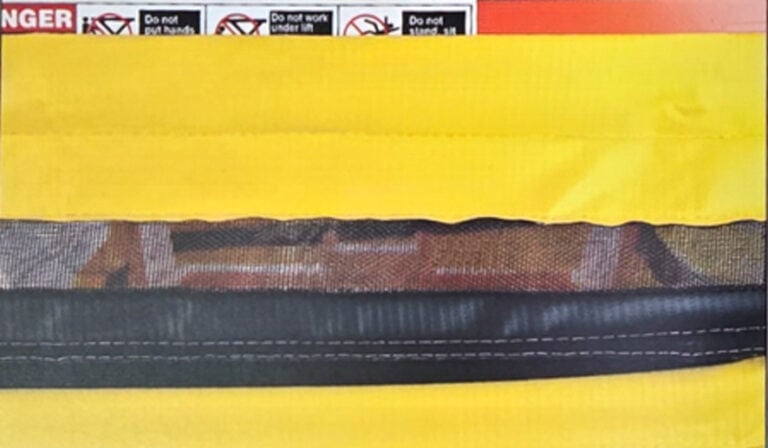
All 4-sided OTCO Lift Table Guards have a durable, vinyl coated mesh venting panel sewn into the upper convolution for the release of air or the drawing in of air during normal lift table operation.
The mesh allows for rapid air displacement. Ensuring your guard expands and contracts uniformly without putting stress on the seams of the protective guard, maximizing the life of the material and keeping your workplace safe.